
Major Khathing was the first man to hoist the Indian flag in Tawang. He also brought Bum La under Indian control.
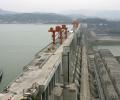
China defends its construction of a dam on the Brahmaputra river in Tibet, addressing concerns from India and Bangladesh about its potential impact on water flow and the environment.

The epicentre was located in Tsogo Township of Dingri County, which has a population of approximately 6,900 people within a 20-km radius. There are 27 villages within this area.

India is preparing to resume the Kailash Mansarovar Yatra, a pilgrimage to Mount Kailash in Tibet, after a three-year hiatus. The decision comes as part of efforts to improve relations between India and China, which have been strained since a military standoff in 2020. The two countries have also agreed in principle to resume flight services between them.

The Tibet-bound plane was carrying 113 passengers and nine crew members, state-run Xinhua news agency reported.

In the talks, China emphasised that the two sides should proceed from the fundamental interests of China, India and adhere to the strategic height and long-term perspective of China-India relations, the readout said.

Seven people were killed and 136 others injured in Tibet after the region was jolted by Sunday's powerful 6.8 magnitude temblor that centered in Sikkim, the Chinese government said on Wednesday.
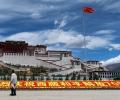
National security, consolidation of border defences and border security highlights China's Tibet policy, points out Jayadeva Ranade, the former senior RA&W officer and China expert.

China's ruling Communist Party has appointed Wang Junzheng, sanctioned by the US, Britain, EU and Canada for his alleged role in the human rights violations against Uygur Muslims in Xinjiang, as the head of its party unit in the sensitive Himalayan region of Tibet.

If Xi Jinping can establish control over the PLA Ground Force, relations between India and China will settle down to an even keel. The next few weeks will show whether Xi has finally succeeded in gaining control over the PLA Ground Force. That could bring about the substantive shift in India-China relations that both our leaders have been working for, observes Ambassador Prabhat Shukla.
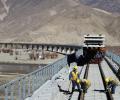
Arunachal Pradesh Chief Minister Pema Khandu has expressed grave concerns over China's mega dam project near the Arunachal border, calling it a 'water bomb' and an existential threat.
When completed, it will be the second important road link between the Himalayan kingdom and China.

China displayed a range of new weapons at a military parade, including laser weapons, nuclear ballistic missiles, giant underwater drones, and fifth-generation aircraft.

This development comes against the backdrop of Beijing announcing Chinese names for some places in Arunachal Pradesh, which the neighbouring country claims as the southern part of Tibet.

A total of 750 pilgrims have been selected through a computerised draw for the upcoming Kailash Manasarovar Yatra in Tibet, marking the resumption of the pilgrimage after a five-year gap. The Yatra's resumption is seen as an attempt to normalize India-China relations, which were strained by the eastern Ladakh border standoff. The pilgrimage will begin in June and continue until August, with pilgrims traveling in five batches via the Lipulekh route and ten batches via the Nathu La route. The selection process was deemed "fair, computer-generated, random, gender-balanced" by the Ministry of External Affairs (MEA), which organized the pilgrimage.

Wang Yang and Xi Jinping's visits signal the beginning of a major Chinese push to bring about a transformation of Tibet, observes Jayadeva Ranade, the distinguished China expert and retired RA&W officer.

If Patel had lived a few years more, he may or may not have become prime minister. But for sure, his presence would have kept Nehru in check, points out Harishchandra.

India and China have announced a series of measures aimed at improving their relationship, including maintaining peace along the border, reopening border trade, and resuming direct flights.
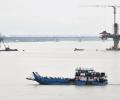
'China could intentionally release excess water.' 'The North East is already flood-prone during the monsoon, and even a controlled release from Chinese dams (during the monsoon) could worsen flooding.'

China supplied more than $20 billion worth of arms to Pakistan. These include 20 J-10CE and JF-17 Block III fighter aircraft, Wing Loong drones, frigates, submarines, Hongqi HQ-9P surface-to-air missiles, 240 PL-15E air-to-air missiles, LY-80 air defence systems, ZDK early warning aircraft and other weapons.
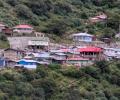
At the end of the discussion, the older Monpa said that if today the Chinese were to come inside India, "I will fight and kill them", prudently adding, "if they are of my age, if they are younger soldiers, I will not be able to fight". The entire village had a good laugh.

The fierce battles of Galwan, Rezang La, Gurung Hill, and Walong taught the PLA a hard lesson: Fighting the Indian Army would never be easy or inexpensive.
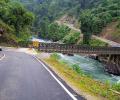
India on Wednesday outright rejected China's attempts to rename some places in Arunachal Pradesh, saying such 'preposterous' attempts will not alter the 'undeniable' reality that the state 'was, is, and will' always remain an integral part of India.

About 30 airports have been either built or under construction in Tibet and Xinjiang provinces which will boost China's civil and military infrastructure in the remote regions bordering India, the country's official media reported.

'It is a breathtaking journey towards the Tibet border, especially since the Border Road Organisation has accomplished a fabulous feat in black-topping the road till the border.' 'One is left with a salute for the dauntless Indian soldiers who spend the winter in these majestic, though inhospitable areas (we were told that the temperature comes down to minus 40 in winter),' recounts Claude Arpi.
It is time for India to get out of its defensive mindset and timid approach in dealing with China. There are vital national security interests at stake. Relations with China must be handled from a strategic, not a legalistic, perspective.
China has defended its plan to build the world's largest dam on the Brahmaputra River in Tibet, assuring that the project will not affect riparian states and safety issues have been addressed through decades of studies. The dam, estimated to cost USD 137 billion, has raised concerns in India and Bangladesh, but Chinese authorities maintain that the project has been thoroughly studied and safeguards are in place. The dam is part of China's efforts to develop clean energy and respond to climate change.

China is worried about the situation post the Dalai Lama and that his reincarnation could surface in Arunchal Pradesh, a region it claims as its own, but which is part of the Indian Republic, says former RA&W Additional Secretary Jayadeva Ranade.

US Secretary of State Mike Pompeo on Wednesday named Robert Destro, assistant secretary of state for democracy, human rights and labour, as the special coordinator for Tibetan issues. Destro will focus on advancing dialogue between the Communist-run government in Beijing and the Dalai Lama, protecting the distinct religious cultural and linguistic identity of Tibetans, improving respect for their human rights and much, much more, Pompeo said.

Why can't the Indian government propose to the Chinese a corridor circumambulating the Holy Mountain where people from both sides could perform the yatra again? asks Claude Arpi.
China has reiterated its plan to build the world's largest dam over the Brahmaputra River in Tibet, near the Indian border. The Chinese Foreign Ministry has assured that the project, estimated to cost around USD 137 billion, will not have any negative impact on downstream countries, India and Bangladesh. The ministry has stated that the project has undergone rigorous scientific verification and will be conducive to disaster prevention and mitigation, as well as climate change response. India has expressed concerns about the dam, raising the issue during talks with the visiting US National Security Advisor, Jake Sullivan. China has maintained that the project will not negatively affect the lower reaches and has committed to maintaining communication with downstream countries.

'We are now in a situation where our country is not yet free.' 'China is still very strong and militarily powerful.' 'In such a situation, we need the Dalai Lama to bring about a resolution to the cause of Tibet.' 'That's one of the main reasons that at age 90, he has accepted that there should be a 15th Dalai Lama after him.'
China has approved the construction of the world's largest dam on the Brahmaputra River in Tibet, close to the Indian border. The USD 137 billion project, which is expected to dwarf even China's own Three Gorges Dam, has raised concerns in India and Bangladesh, the downstream riparian states. Concerns in India are centered around China's potential to control water flow, potentially enabling the release of large amounts of water to flood border areas in times of hostilities. The dam is part of China's 14th Five-Year Plan, and the Chinese government claims that the project is safe and prioritizes ecological protection.

On July 2 or July 6, the Dalai Lama will reveal his mind on his successor. This makes Beijing extremely nervous as the Communist regime fully realises the importance of controlling the next Dalai Lama, points out Claude Arpi.
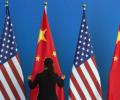
Secretary of State Mike Pompeo said he was taking action against an unspecified number of Chinese officials, including from the ruling Communist Party, under a US law that calls on China to let Americans visit Tibet.

Arpi deserves to be complimented for the commitment and hard work that have gone into this production. The frustrations of seeking reliable documentation from the catacombs of the Indian bureaucracy did not deter him from going after the best information available, and the result is one that he can take much satisfaction in. Ambassador Prabhat P Shukla, Member Advisory Council, Vivekananda International Foundation, reviews Claude Arpi's The End of an Era: India Exits Tibet.

On November 18, 1962, 114 soldiers of the 13th Kumaon fought till the last man, and last bullet, in sub-zero temperatures, to beat back the huge Chinese army. We salute the Heroes of Rezang La.
India has expressed concerns over China's plan to build a mega dam on the Brahmaputra River in Tibet, stating that it will continue to monitor and take necessary measures to protect its interests. New Delhi has urged Beijing to ensure that the interests of downstream states are not harmed by activities in upstream areas. The dam, estimated to cost USD 137 billion, has raised apprehensions about its impact on the ecological balance of Arunachal Pradesh and Assam, through which the Brahmaputra flows. India has repeatedly expressed its concerns to China through diplomatic channels, highlighting the need for transparency and consultation with downstream countries.
What appeared to be a generous act of friendship was, in truth, a manoeuvre within a much larger strategic game. The United States used the 1962 war not just to aid India but to test how far it could be pulled into the Western fold, points out Dr Kumar.
India has stated its neutral stance on religious matters following the Dalai Lama's announcement of his succession plan, which China has rejected. The statement comes as the Dalai Lama approaches his 90th birthday, with China urging India to exercise caution on Tibet-related issues.
